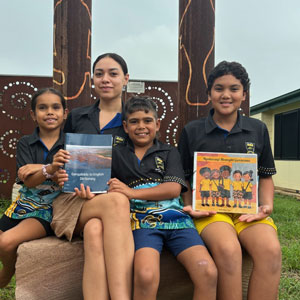
Language immersion, cultural respect and community connection—is it possible for a school to provide all this when teaching a new language? Burketown State School is proving it can be done by embracing Gangalidda, the traditional language of the area.
Sparked by student voices, their approach is bridging barriers through the power of language.
Burketown students delivered a passionate speech in the statewide
Aboriginal and Torres Strait Islander Aspirations Program (ATSIAP) challenge, which gives Aboriginal and Torres Strait Islander students the opportunity to investigate solutions for real-world challenges.
They used the opportunity to speak about cultural identity and the value of learning their language on Country. Those voices were heard loud and clear, and inspired a change that’s transforming the school—starting by introducing lessons for Gangalidda.
'The passion shown by our students changed our whole landscape here and that passion is now resonated in what we’re doing throughout the school,' says Principal Chris Ford.
Gangalidda spoken around the school
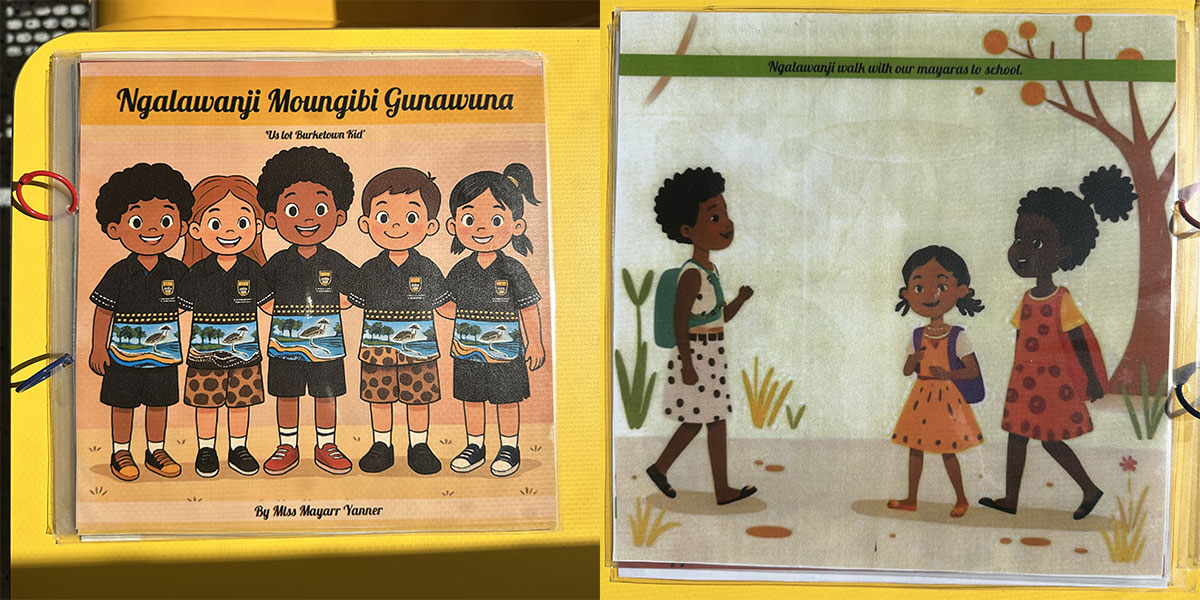
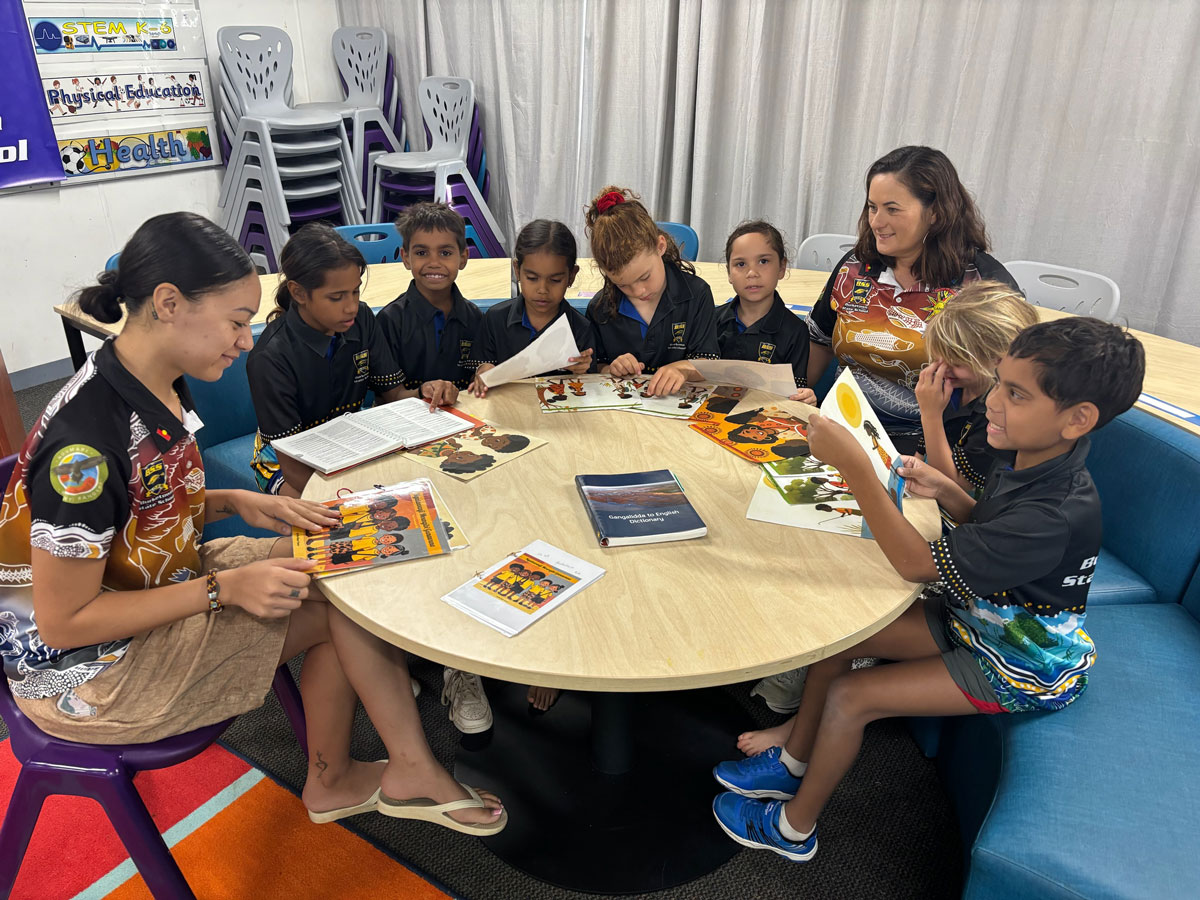
Learning starts in the classroom, where students are discovering the joy of speaking the traditional tongue with the help of storybooks created by Gangalidda language teacher Mayarr Yanner. Written together with students, these books help them connect with the language in a relevant and meaningful way.
The first in the series,
Ngalawanji Moungibi Gunawuna, goes through a day in the life of a Burketown student.
Teaching it in class is the first step, but Burketown State School wants to immerse students in the language and give them every opportunity to keep using it.
With the help of a Gangalidda dictionary published by the
Carpentaria Land Council Aboriginal Corporation (CLCAC), the school has started integrating the language into activities outside the classroom.
'We often go out on Country with the students to give them real-world learning, but now we want to bring that into school as well,' says Chris.
'We’re putting in a big cultural sustainability garden with bush tucker and medicinal herbs. Everything the students talk about while caring for the plants will be in Gangalidda, while they also get practical knowledge of local plants and bush tucker.
'Up in the Gulf, we’re known as the barramundi capital of Australia, so we are also linking up with Karumba Barramundi Centre to provide fingerlings for our aquaponics system. Students will raise these as they feed nutrients into the garden and once grown, we can send them up to Karumba.'
The garden will have tags showing both the Gangalidda and English names for everything, helping students speak it as they work on the projects. Their classroom learning, school projects and visits from local Rangers will keep students using the language daily.
'They’re going to be immersed in the culture at school, so that when they do go out on Country, they can really connect with it,' says Chris.
Community partnerships play a huge role in the school’s mission to immerse students in the Gangalidda language and culture. These relationships build local connections with students and gives them a chance to feel like they’re making a difference in the community from a young age.
'We have a Junior Ranger program running with the Gangalidda-Garawa Rangers that shows students what it’s like working on Country, how they make change and keep local languages alive. The Senior Rangers teach them about being responsible for the land they live on,' says Chris.
'These programs create engagement with the kids and that’s what we’re looking for. Not just learning the language but also using it and seeing the value in it, that’s the change we want to see.'
Spirals and student outcomes
Bringing all these concepts together is the school’s Spiral Model, developed by Curriculum Head of Department Karen Ford.
'The purpose of the Spiral Model is to align education with Indigenous worldviews,' says Karen.
'It was designed collectively with our Traditional Owners and this is what came out of it. We have a model that represents Indigenous people, their knowledge and ways of doing things—and it’s all underpinned by education policies and practices.'
The Spiral Model reflects key elements of Indigenous learning and is deeply embedded in the school’s teaching:
-
Non-linear and iterative: Reflects cyclical patterns like seasons and life stages.
-
Relational learning: Strengthens connections with community, peers and Country.
-
Lifelong learning: Encourages continuous growth and reflection.
The impact of this approach is already being felt. Staff have noticed a positive shift—not just in academic outcomes, but in how students engage with school. Immersive, student-led projects like the garden and storybooks provide opportunities to explore local culture and feel excited about learning.
'Student engagement has changed quite a bit since we’ve had Gangalidda language running through the school,' says Chris.
'The positive uplifting feeling of the school is there and it’s getting stronger the more we build up their confidence around the language and cultural identity. We see that students are really happy to be at school and to be part of it.'
By aligning education with culture and community, Burketown State School has fostered a teaching environment and sense of belonging that keeps students coming back eager to learn. Some students say 'it’s fun to learn Gangalidda,' while others speak to deeper motivations: 'I want to learn Gangalidda because my Gangu (grandfather) speaks it'.
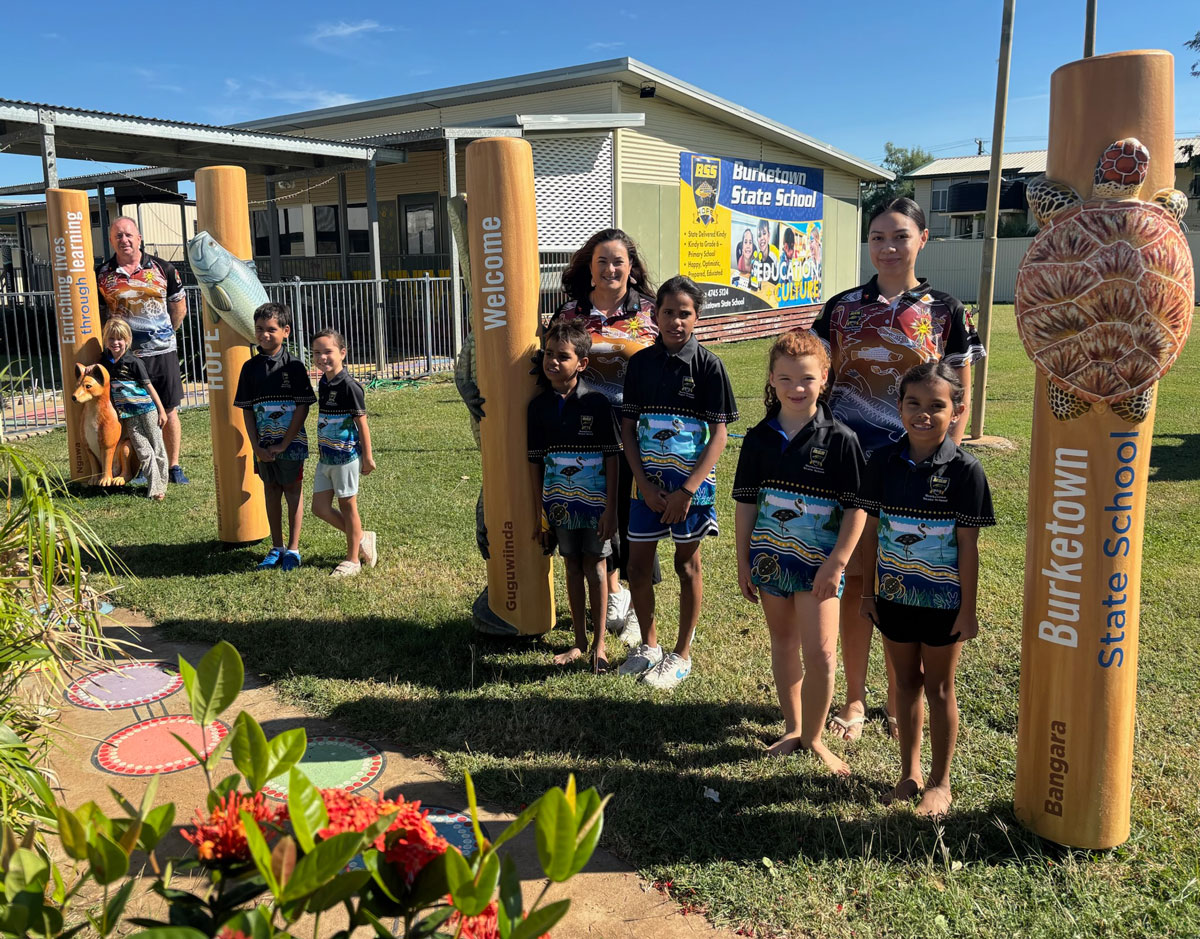
Burketown State School is a
Partnership Initiative (PDF, 712KB) school, receiving support to explore place-based solutions and work with their local community in shared decision making. These strong community connections are positively impacting student outcomes both inside and out of the classroom.