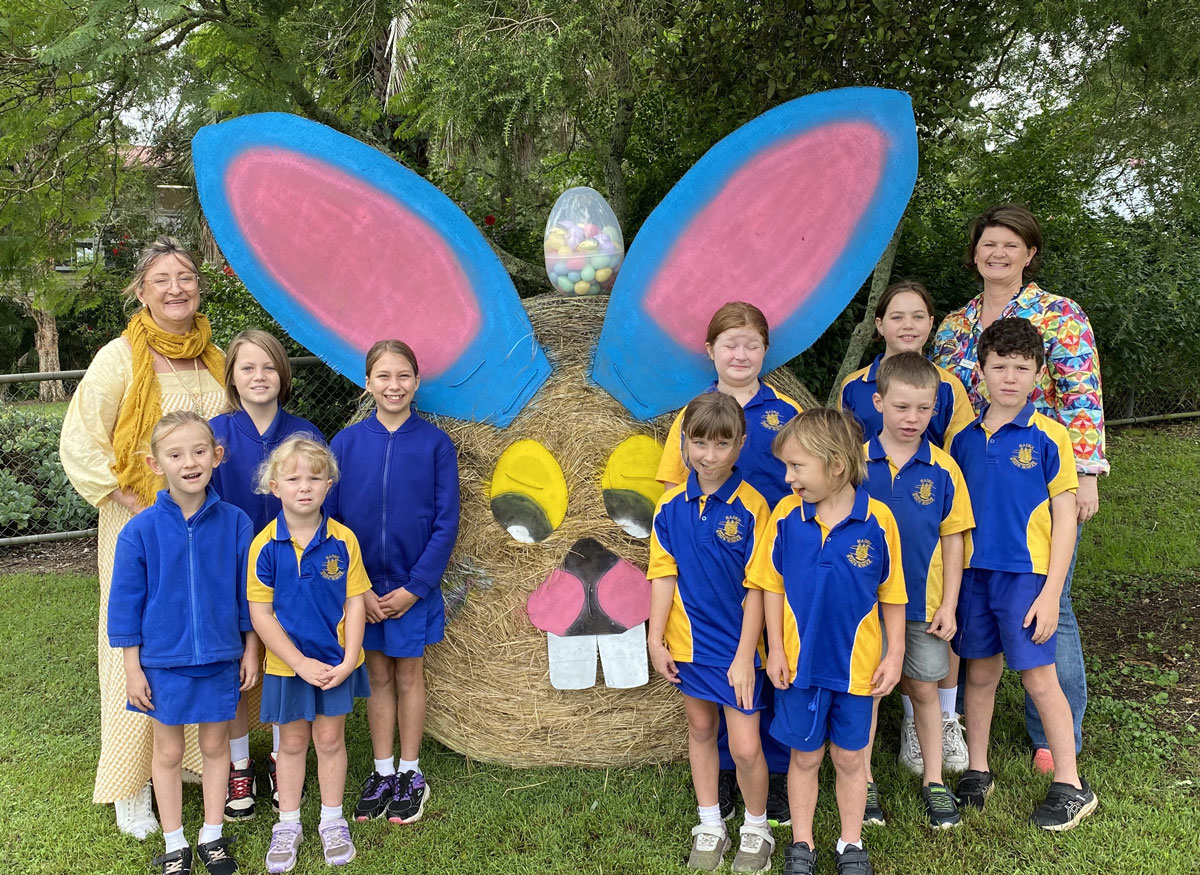
Pop quiz! What job boasts a resume that lists event manager, public speaker, community leader, teacher, principal and even a dash of building manager and admin officer? If you guessed small school principal, you’re spot on! And believe it or not, that’s just the beginning of what the role involves. To give you a better idea, we’ve asked 2 small school principals to share a glimpse into their daily lives.
Let’s begin with Tamsyn Gardiner, who runs Karumba State School in Far North Queensland. With just 17 students, 2 teachers (including herself) and a business manager who also works as the school’s teacher aide, Tamsyn shows what it means to wear many hats in a small school community.
Then traversing exactly 2,000km south, we will find Peggy Niebling, a teaching-principal at Haden State School in the Darling Downs Region. Haden State School has 13 students and 2 teacher aides.
While their physical environments are vastly different, Tamsyn and Peggy juggle the responsibilities of running a school and teaching, with being a trusted and dependable leader in their close-knit communities.
They also share the view that small school principalship is equal parts rewarding and challenging.
'Being a small school principal has been the most amazing learning experience. It’s pushed me to my personal and professional limits, and I’ve certainly grown and withered, and expanded as a result,' Tamsyn says.
Peggy has a similar perspective on the professional depth required to be a small school principal.
'I have needed every bit of my teaching knowledge and experience, and more. Professional growth also helps personal growth and I am a different woman to the one I was when I started,' Peggy says.
The many hats of a teaching-principal
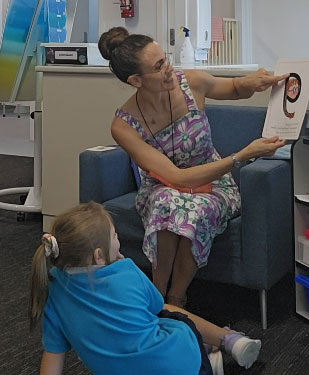
Small schools typically have composite classes—all students in the same classroom, being taught the same subject at different levels. This means Tamsyn and Peggy are experts in the Australian Curriculum in order to plan and execute dynamic lessons from Prep to Year 6.
On Monday morning, Tamsyn has P–2 English, followed by literacy groups, which she says are the best part of her day.
'It’s where learning is most visible in the day-by-day improvements in reading, writing and comprehension. It thrills me to see the students becoming more capable—literacy is a super power,' Tamsyn says.
Peggy’s week also kicked off with a focus on literacy. Peggy’s classroom is P–6, so she practices explicit teaching, which means managing the instruction of reading across the span of diverse learners.
'[In my classroom] differentiation is my bread and butter—constantly adjusting to suit the needs of every year level and every student,' Peggy says.
In student break times, Tamsyn and Peggy catch up on the variety of administration tasks for the week.
Peggy organised the school’s involvement in the community’s ANZAC Day march, creating programs for the school ANZAC ceremony and arranging the maintenance of the grounds in readiness for the parade.
Tamsyn found herself playing amateur meteorologist as North Queensland’s notorious wet season loomed, threatening to upend her week. With a rapidly rising river on the horizon, her fellow teacher had to leave early for an important personal event to avoid being stranded.
Due to the remoteness of the Karumba, there’s no immediately available relief staff, leaving Tamsyn to navigate a doubled teaching load, merging classes and rewriting lesson plans to keep everything on track.
'It can feel like a Jenga tower, where if a block of the structure is removed, there’s risk of the whole thing collapsing,' Tamsyn says.
Part of the family
Karumba is home to 500 people; Haden has only 250. Both principals say their school communities have become like family.
'With 14 students and families, my school is small enough for me to know everyone well; to understand their contexts and to be part of their lives,' Peggy says.
This has its advantages. Peggy describes how the close working relationship with parents has helped to build a positive culture in the school. Families feel welcome and included, and a partner in their children’s education.
And its challenges, as Tamsyn explains, navigating thoughtfully while setting up a playgroup at the school, which has since become well attended.
'Many parents and grandparents choose to mill around before school and wait for the bell to ring before leaving. This is a lovely time to chat and I try to always make myself available for this.'
Tamsyn says much of the reward is also in the relationships built with the small, but mighty, school team.
'Building a school community and collaborating on what our collective vision is for education is exhilarating, empowering and a driving force.'
Beyond school grounds

Small school principals often become community leaders, playing a vital role in supporting essential services within their rural town.
Peggy was invited to speak at the Rosalie Shire’s Australia Day Awards ceremony and also worked with the school’s parents to organise the school’s sausage sizzle for election day. This is an important fundraising opportunity for their P&C to help raise funds for camp and also a crucial opportunity to develop relationships with the community.
'I need to be known by my community and I need to know them. Successful community partnerships help the reputation and image of the school and in turn, lead to positive talk.
'It has been a privilege to change the narrative about our school… and growing our students to be active participants in the community. We know this is best for their mental health and future work prospects,' Peggy says.
It comes at a personal cost to school staff. Weekends are spent at community events, like the local show.
And school families are often neighbours. This can make it difficult to switch off.
'I feel the weight of the community and it can be overwhelming,' Tamsyn says. Peggy says it is important to be transparent and authentic while also maintaining confidentiality which can be a challenge.
'In small school communities… parents talk and they each know what is going on for the other family. It is my job to know everything going on for my students, so I can pre-empt it in the classroom,' she says.
Teaching, learning and the rest
In the days we’d been following Tamsyn and Peggy, they’ve each strayed well outside their comfort zones into a variety of necessary tasks, including but not limited to: fixing a broken IT server, organising new carpet for a classroom, overseeing the repairs to a leaking roof, conducting playground audits, fixing toilets and creating promotional displays for the local show.
They’ve also managed staffing rosters, paid invoices, logged student reports, written assessments on visiting student teachers, written newsletters and led school assemblies as part of their principal duties.
Both spent personal time to set up their classrooms and prepare their lessons for the week ahead.
'Nobody truly knows the extent of the role until they’ve done it themselves,' Tamsyn says.
Peggy agrees and said it requires careful thought and commitment.
'It is a specialised role requiring significant emotional awareness. Generally speaking, communities want leaders who are authentic and willing to be involved.'
All worth it
As Tamsyn looks out over the Gulf of Carpentaria at the end of another big week, she is contemplative.
'The sense of achievement and satisfaction that can come from this role is inexplicable.
'It is also rewarding beyond measure ;and the relationships you build with staff and students are family-like.
'It is truly the people who make it possible and worthwhile.'
Peggy recommends the role to anyone who loves unexpected adventures, believes in quality education for all students, is passionate about human relationships and willing to be a community figure.
'If this is you, then the Level 1 Teaching Principal is just for you!' Peggy says.
*The department thanks both Peggy and Tamsyn for keeping diaries in addition to their work to help us give an insight into their lives. For Tamsyn, this was week 10, term 1 and for Peggy it was week 1, term 2.